Kuku Sabzi
A vibrant, aromatic cornerstone of Persian (Iranian) cuisine, traditionally cooked to celebrate Nowruz (the Persian New Year). This fresh, egg-bound dish features an overwhelming abundance of green herbs held together just enough to create a light, fluffy, and deeply savory slice.
Free, no account needed.
Did you cook it? Add your photo
So it lives in your cookbook with your story, not mine.
Add my photo
50 min
Persa (Iraní)
6 servings
The story behind
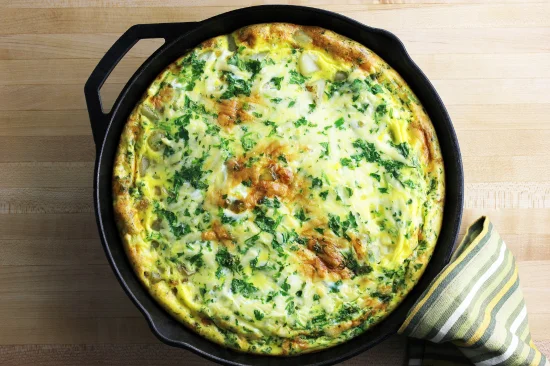
The stunning overhead view within the file "Kuku sabzi.png" perfectly highlights this Persian classic executed in its most comforting, rustic element: a well-seasoned, matte-black cast-iron skillet. Set beautifully against a light wood tabletop and a green-and-yellow striped kitchen towel, the dish displays a bright yellow surface laced with a rich mosaic of deep green herbs. Light golden-brown toasted spots dot the top, with hints of tender, translucent onions or potatoes peeking out to offer an extra layer of texture. Unlike a Western frittata or an omelet where egg is the main highlight, an authentic Kuku Sabzi features a massive ratio of herbs to egg, creating a vibrant emerald-green interior when sliced. Symbolizing rebirth, fertility, and the arrival of spring, it is traditionally sliced into wedges and enjoyed hot or at room temperature alongside flatbread and cool yogurt.
Instructions
-
1Thoroughly wash and completely dry all your fresh herbs (parsley, cilantro, dill, and scallions). Ensuring the herbs are bone-dry before chopping is vital to prevent the frittata from turning soggy or watery.
-
2Finely chop the herbs using a sharp chef's knife; avoid using a food processor, as it can bruise the leaves and turn them into a wet paste.
-
3If you are including diced onions or potatoes (as seen in the file "Kuku sabzi.png"), heat a tablespoon of oil in your cast-iron skillet over medium heat and sauté until tender and translucent. Remove from the skillet and let cool slightly.
-
4In a large mixing bowl, vigorously whisk the 6 large eggs with the sea salt, black pepper, ground turmeric, and baking powder until slightly frothy.
-
5Fold the mass of chopped herbs and cooked onions/potatoes into the beaten eggs. Stir gently with a spatula until the herbs are fully coated in the egg mixture.
-
6Preheat your oven to 180°C (350°F) to ensure an even finish.
-
7Wipe out your cast-iron skillet, add the remaining 2 tablespoons of olive oil (or butter), and place it over medium heat, swirling to coat the bottom and up the sides evenly.
-
8Pour the green egg mixture directly into the hot skillet. Use the back of a spoon to level out the top and spread the herbs evenly across the pan.
-
9Cook undisturbed on the stovetop over medium-low heat for 8-10 minutes until the outer edges are fully set and pulling away from the sides slightly.
-
10Transfer the skillet into the preheated oven and bake for an additional 12-15 minutes until the center is firm to the touch and the top shows off those beautiful golden-brown patches highlighted in the file "Kuku sabzi.png".
-
11Carefully remove from the oven using heavy oven mitts and set the hot skillet down onto a wooden trivet or table.
-
12Let the Kuku Sabzi rest for 5-10 minutes, then slice it into wedges directly inside the skillet. Serve warm or at room temperature with flatbread and a dollop of cold garlic yogurt.
Share this recipe
Rate this recipe
Sign in to the app to rate
You might also like
🍊
Save this recipe to your Zest
Add photos when you cook it, write your story, and share it with a Moment Card.
Create my free account