Canard à l’Orange
A crowning achievement of classic French bourgeois cuisine. This recipe pairs succulent, tender duck meat with a sophisticated sweet-and-sour orange sauce (bigarade) built on caramelized sugar, vinegar, and premium liqueur.
Free, no account needed.
Did you cook it? Add your photo
So it lives in your cookbook with your story, not mine.
Add my photo
120 min
Medium
Francesa
4 servings
The story behind
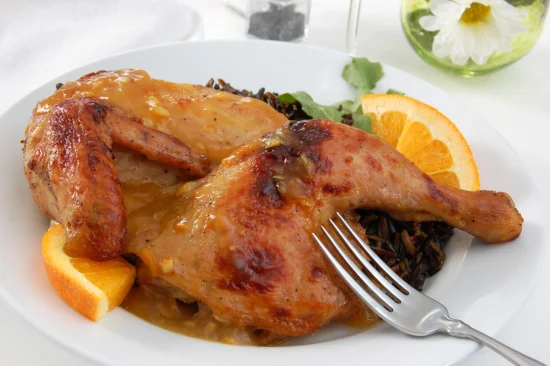
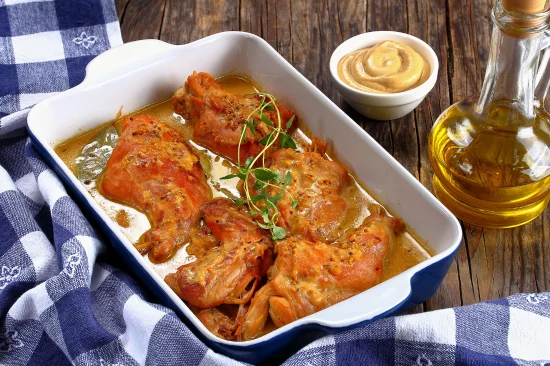
The image in the file "Canard à l’Orange.png" beautifully illustrates the classic plating of this iconic dish: perfectly roasted duck quarters coated in a glossy, velvety citrus glaze, accompanied by wild rice and fresh orange slices. While it became a staple of 19th-century Parisian fine dining, culinary historians frequently trace its origins back to Renaissance Tuscany, where it was known as 'Paparo alla Melarancia' before traveling to France with Catherine de' Medici. The genius of this dish lies in the seamless balance between the natural richness of the duck and the vibrant, clean acidity of the orange. It is an extraordinary choice for holiday feasts and elegant dinner parties. I highly recommend pairing it with a structured, high-acidity red wine like a Burgundy Pinot Noir or a refined Chianti Classico.
Instructions
-
1To get things started, if using a whole duck, clean it thoroughly, pat the skin completely dry inside and out with paper towels, and truss it tightly with kitchen twine. If using pieces (as seen in the image), score the fatty skin in a crosshatch pattern without cutting into the meat to help the fat render out.
-
2Season the duck generously with fine salt and cracked black pepper on all sides.
-
3Place the duck in a roasting pan and bake at 180°C (350°F) for about 1 hour and 15 minutes (turning a whole duck halfway through) until the skin is beautifully crispy and deeply golden. Periodically ladle out the rendered duck fat from the pan and save it for future roasting.
-
4While the duck cooks, use a vegetable peeler to remove the bright orange peel (avoiding the bitter white pith) from two oranges. Cut the peel into very fine strips (julienne), blanch them in boiling water for 2 minutes to remove bitterness, drain, and set aside.
-
5Squeeze the juice from those two blanched oranges and the single lemon. Set the combined juice aside.
-
6To build the traditional gastrique sauce base, combine the sugar and white wine vinegar in a small heavy saucepan over medium heat. Allow it to melt and turn into a light, amber-colored caramel without stirring.
-
7Carefully pour the citrus juice into the caramel (it will sputter up fiercely). Simmer over low heat, stirring occasionally, until any hardened caramel completely dissolves back into the liquid.
-
8Pour in the rich duck or veal stock and throw in the blanched orange zest strips. Let the sauce simmer gently and reduce by half for about 15 minutes, until it becomes wonderfully glossy and thick enough to coat the back of a spoon.
-
9Pour in the Grand Marnier liqueur and let it simmer for 2 additional minutes to flash off the raw alcohol. Turn off the heat and whisk in the cold butter cubes one by one to give the sauce a spectacular professional sheen.
-
10Remove the duck from the oven, let it rest for 10 minutes, and carve it into neat portions if cooked whole.
-
11Plate the warm duck pieces beautifully over a bed of steamed wild rice, nap them generously with the hot orange sauce, and garnish with fresh orange segments.
Share this recipe
Rate this recipe
Sign in to the app to rate
You might also like
🍊
Save this recipe to your Zest
Add photos when you cook it, write your story, and share it with a Moment Card.
Create my free account